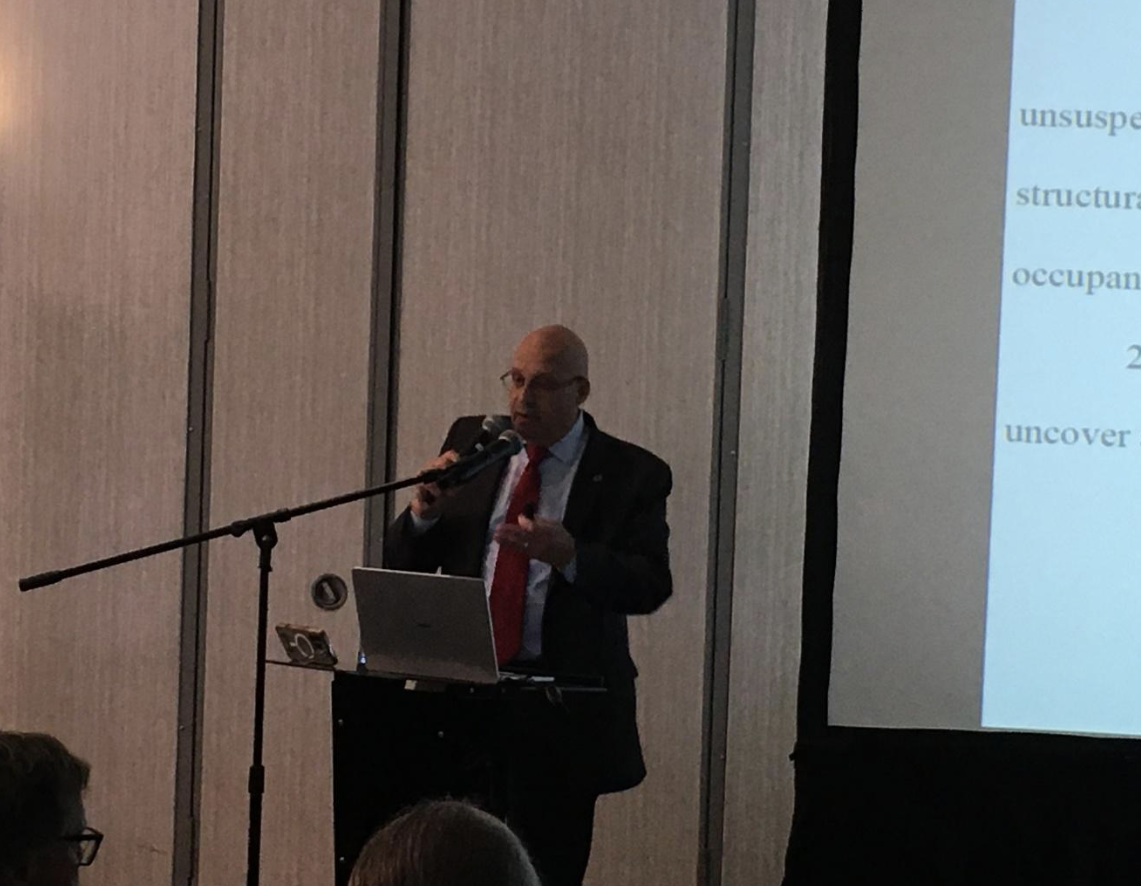
Ansbacher Law is proud to share that founding attorney Barry B. Ansbacher spoke this weekend at the Association of Professional Reserve Analysts’ 2026 APRA Symposium in Hollywood, Florida.
The APRA 2026 Symposium was held on Saturday, June 6, 2026, at the DoubleTree Resort by Hilton Hollywood Beach and brought together reserve study professionals, industry leaders, and community association professionals for a full day of education and discussion. The event agenda included programming on reserve studies, inflation, wildfire risk, sports courts, and “SIRS: The Legal Side.”
Barry’s participation reflects Ansbacher Law’s continued leadership in Florida condominium, homeowner association, construction, and real estate law, particularly as associations continue to navigate evolving reserve study and building safety requirements.
Sharing Legal Insight on Structural Integrity Reserve Studies
Structural Integrity Reserve Studies, commonly referred to as SIRS, remain one of the most important legal and financial issues facing many Florida condominium associations.
Under Florida law, certain residential condominium associations with buildings that are three habitable stories or higher must complete a Structural Integrity Reserve Study at least every 10 years. Florida law also provides requirements regarding who may perform or verify a SIRS, what the study must include, and how associations must address reserve funding tied to the study.
For condominium boards, managers, reserve professionals, and unit owners, these requirements are not only technical or financial. They also raise significant legal questions involving board duties, budget planning, disclosures, funding decisions, maintenance obligations, and potential liability.
Barry’s presentation at the APRA Symposium addressed the legal side of these issues, helping attendees better understand how Florida’s SIRS requirements intersect with community association governance and long-term property planning.
Why SIRS Compliance Matters for Florida Condominium Associations
For Florida condominium associations, reserve studies are more than planning tools. They can directly affect how boards prepare budgets, communicate with owners, evaluate maintenance obligations, and make decisions about assessments, repairs, and long-term capital needs.
Florida’s Condominium Act defines a Structural Integrity Reserve Study as a study of reserve funds required for future major repairs and replacements of condominium property, including estimated remaining useful life, estimated replacement cost or deferred maintenance expense, and a reserve funding plan or schedule.
That legal framework makes it critical for associations to understand not only whether a SIRS is required, but also how the study should be reviewed, implemented, updated, and communicated.
Boards and managers should carefully evaluate:
- Whether their condominium building is subject to SIRS requirements
- Whether the proper professionals are involved in the study
- Whether the association’s budget aligns with the most recent reserve funding plan
- Whether owners have received required notices or access to the completed study
- Whether future repairs, replacements, assessments, loans, or lines of credit affect the association’s reserve obligations
Because these decisions can carry legal, financial, and fiduciary implications, experienced legal guidance is often essential.
Ansbacher Law’s Commitment to Education and Community Association Leadership
The Association of Professional Reserve Analysts was founded in 1995 by principals of leading reserve study provider companies. APRA’s stated purpose is to provide a common base of knowledge, standards of care, and professionalism within the reserve study provider industry.
Ansbacher Law values opportunities to collaborate with professionals who serve Florida’s condominium and homeowner association communities. Events like the APRA Symposium create meaningful opportunities for reserve analysts, attorneys, managers, board members, and industry professionals to discuss the issues shaping the future of association governance and building safety.
Barry’s participation in this year’s symposium reinforces Ansbacher Law’s ongoing commitment to education, professional leadership, and practical legal guidance for Florida community associations.
Helping Florida Associations Navigate SIRS, Reserve Funding, and Legal Compliance
As Florida associations continue to evaluate reserve funding, structural integrity, budget planning, and statutory compliance, the legal landscape remains complex.
Ansbacher Law assists condominium associations, homeowner associations, property owners, and community association professionals with legal issues involving:
- Structural Integrity Reserve Studies
- Condominium governance
- Reserve funding and budget obligations
- Board fiduciary duties
- Construction defects and maintenance disputes
- Covenant and bylaw interpretation
- Association operations and legal compliance
- Real estate and construction-related disputes
The firm congratulates Barry Ansbacher on his participation in the 2026 APRA Symposium and thanks the Association of Professional Reserve Analysts for hosting an important educational event for the reserve study and community association industries.