

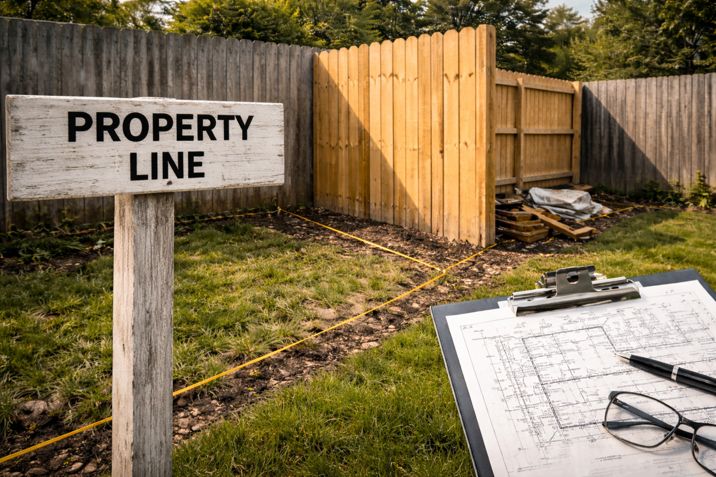
Few things feel more unsettling than realizing a neighbor’s fence, shed, driveway, or addition may be sitting on land you believe is yours. It often starts small, sometimes with a casual comment from another neighbor or a glance at a survey that suddenly does not line up with what you assumed were the boundaries. From there, confusion tends to snowball quickly. Property line disputes are more common than many people realize, and when construction crosses a boundary, the legal issues can become serious very fast. If you suspect a neighbor has built on your property, we are here to help. Read this blog and contact a Florida real estate litigation lawyer from Ansbacher Law to learn about what to do if a neighbor builds on your property. Here are some of the questions you may have:
How do I know if my neighbor actually built on my property?
Before assuming the worst, it helps to confirm whether an encroachment truly exists, because property lines are not always where people think they are. Some of the most common ways homeowners discover a problem include the following:
- A professional land survey shows structures crossing a boundary line
- A title review reveals easements or discrepancies in the legal description
- Construction begins unusually close to a fence or perceived property line
- A dispute arises during a sale, refinance, or permitting process
Surveys matter. Old fences, landscaping, or informal agreements between prior owners do not automatically define legal boundaries. A licensed surveyor’s findings are often the foundation of any real estate dispute involving encroachment. Without that documentation, it can be difficult to prove anything, no matter how obvious the situation may feel.
What legal issues can arise from a property encroachment?
When a neighbor builds on land that does not belong to them, several legal issues may come into play, and each one carries different risks. Potential legal concerns include the following:
- Trespass, when someone unlawfully occupies or uses another person’s land
- Encroachment, which involves a physical structure extending onto neighboring property
- Adverse possession claims, if the use has continued openly for a long period under Florida law
- Title defects, which can complicate future sales or financing
- Zoning or permitting violations tied to improper construction
The law has specific requirements for adverse possession, including time periods and tax payment obligations, so a neighbor does not automatically gain rights simply by building something. Still, allowing an encroachment to remain unchallenged for too long can weaken your position. Courts often look at how promptly an owner acted once they became aware of the issue.
What are my options if a neighbor builds on my property and refuses to fix the problem?
Once an encroachment is confirmed, resolution does not always require a courtroom, but ignoring the issue rarely ends well. Your options are:
- Informal negotiation to remove or modify the structure
- A written demand letter asserting your property rights
- Mediation to reach a practical settlement
- Legal action seeking removal, damages, or a court order clarifying boundaries
In some cases, a neighbor may be willing to correct the issue once it is clearly documented. In others, the dispute becomes more entrenched, especially when significant money has already been spent on construction. Courts can order the removal of encroaching structures, but outcomes depend heavily on the facts, including the extent of the intrusion and whether it was intentional.
If you believe a neighbor has built on your land, our firm is here to help. Contact Ansbacher Law for a free consultation today so we can discuss your case.