

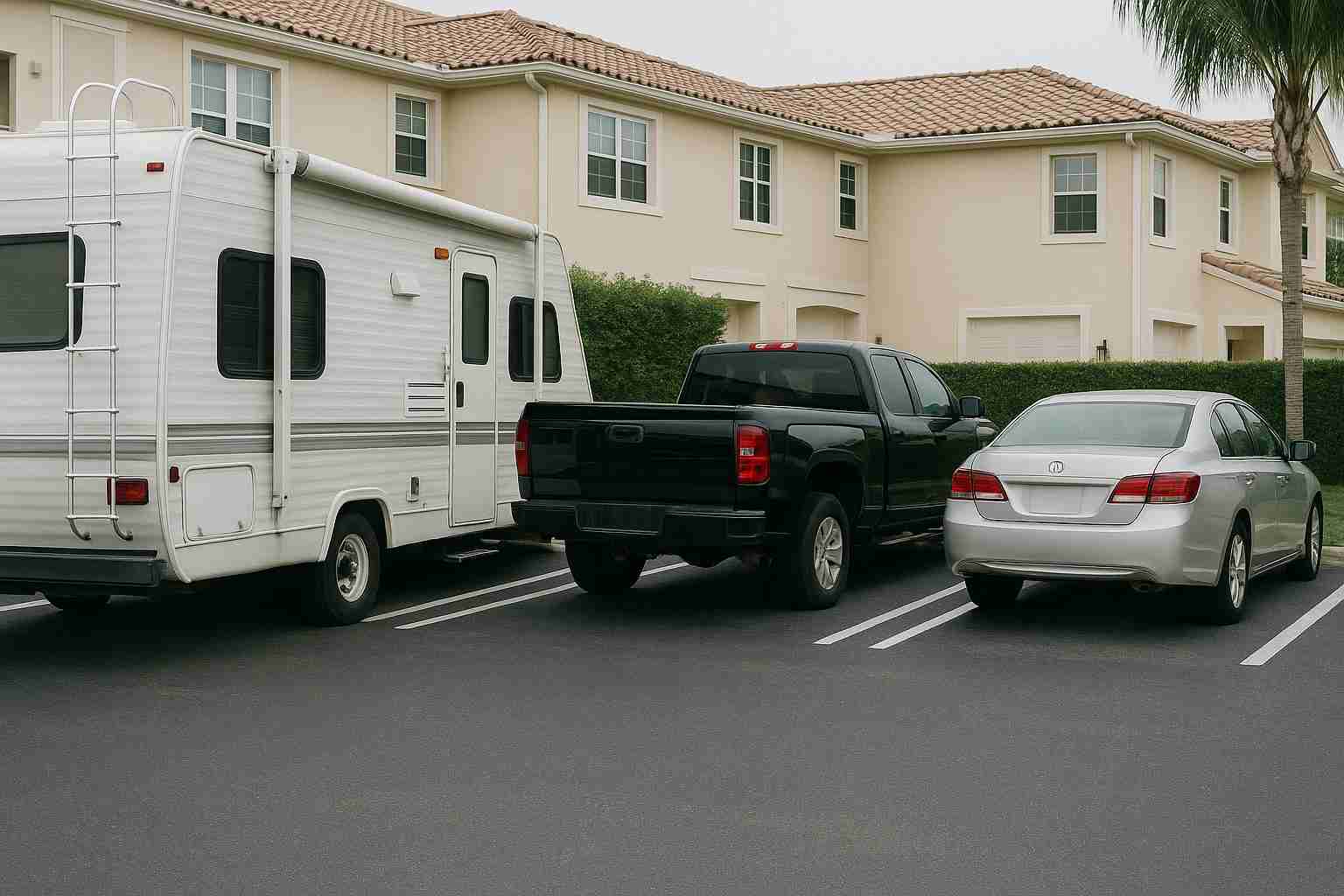
Living in a community with a homeowners’ association can offer stability, order, and an overall sense of predictability, but it also raises questions about what an HOA can and cannot regulate. Many associations adopt detailed rules about parking, vehicle appearance, and how residents may use shared spaces. As a result, owners sometimes wonder whether their HOA has the authority to ban certain vehicles, limit where guests can park, or issue fines for violations. Read on and reach out to the seasoned Florida condo & homeowner association lawyers here at Ansbacher Law to learn more. Here are some of the questions you may have:
What authority does an HOA have to regulate vehicles?
In Florida, an HOA’s power to regulate vehicles usually comes from its governing documents. These include the declaration of covenants, bylaws, and adopted rules, all of which create the framework for what is considered acceptable within the community. Most HOAs rely on that framework to preserve property values and ensure safety throughout common areas. Some of the most common vehicle rules are as follows:
- Limits on commercial vehicles
- Restrictions on oversized or recreational vehicles
- Requirements for proper registration
- Prohibitions on storing inoperable cars in driveways
- Designated zones for guest parking
If the rule appears in the governing documents and does not violate state or federal law, the HOA often has broad discretion to enforce it. However, the association must apply the rule consistently and provide proper notice before imposing fines.
Can an HOA ban certain kinds of vehicles?
Some communities maintain strict guidelines about the types of vehicles allowed on the property. The intent is usually aesthetic or functional. Large RVs, trailers, and boats may block views or create difficulties in narrow roadways, while commercial vehicles may appear out of place in a residential setting. Florida HOAs often can restrict or completely prohibit specific vehicle types, such as:
- Commercial work trucks
- RVs and campers
- Boats and trailers
- Oversized vans
- Vehicles with loud modifications or visible equipment
Still, there are limits. An HOA cannot enforce rules that conflict with state protections for service vehicles or vehicles required for a resident’s disability accommodations. Any restriction must relate to legitimate community interests and must be clearly supported by written rules.
What parking habits can an HOA regulate?
Parking rules are among the most commonly enforced HOA policies in Florida communities. The association may adopt regulations designed to keep traffic moving safely and prevent overcrowding. Residents typically receive guidelines outlining where and how long vehicles may remain in a particular spot. HOA parking rules often include the following:
- Time limits for guest or street parking
- Requirements to use garages or driveways before common-area spaces
- Prohibitions on blocking sidewalks or fire lanes
- Rules against long-term storage of vehicles in common areas
- Guidelines for overnight visitor parking
If a resident violates a rule, the HOA may issue a warning, impose a fine, or even tow the vehicle if the governing documents authorize that remedy.
Florida owners who feel a rule is unclear or unfair should review the governing documents and request clarification from the board. If the rule is not properly adopted, is ambiguous, or has been inconsistently enforced, a homeowner may have grounds to challenge it.
If you have any additional questions or would like to speak with a seasoned attorney about your case, simply contact Ansbacher Law today.